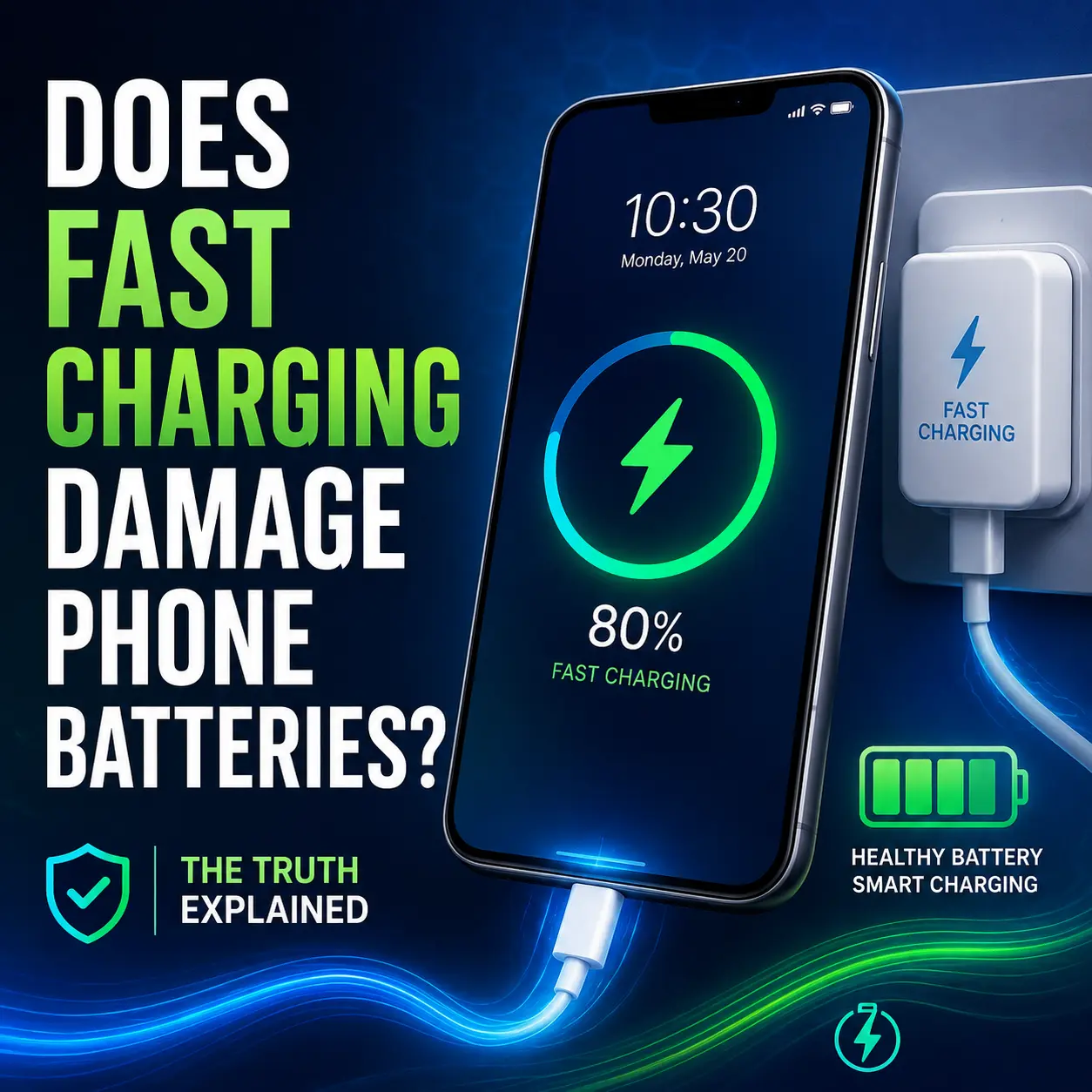
Fast charging has become one of the most popular smartphone features in recent years. Whether you use an iPhone, Samsung Galaxy, Google Pixel, OnePlus, or Xiaomi device, the ability to recharge your battery in a short amount of time is incredibly convenient. However, many smartphone users still ask the same question: does fast charging damage phone batteries? The concern is understandable because batteries naturally degrade over time, and people often assume that pumping more power into a battery must accelerate wear and tear. The reality is more complex than most online myths suggest.
The Truth Most Users Don’t Know
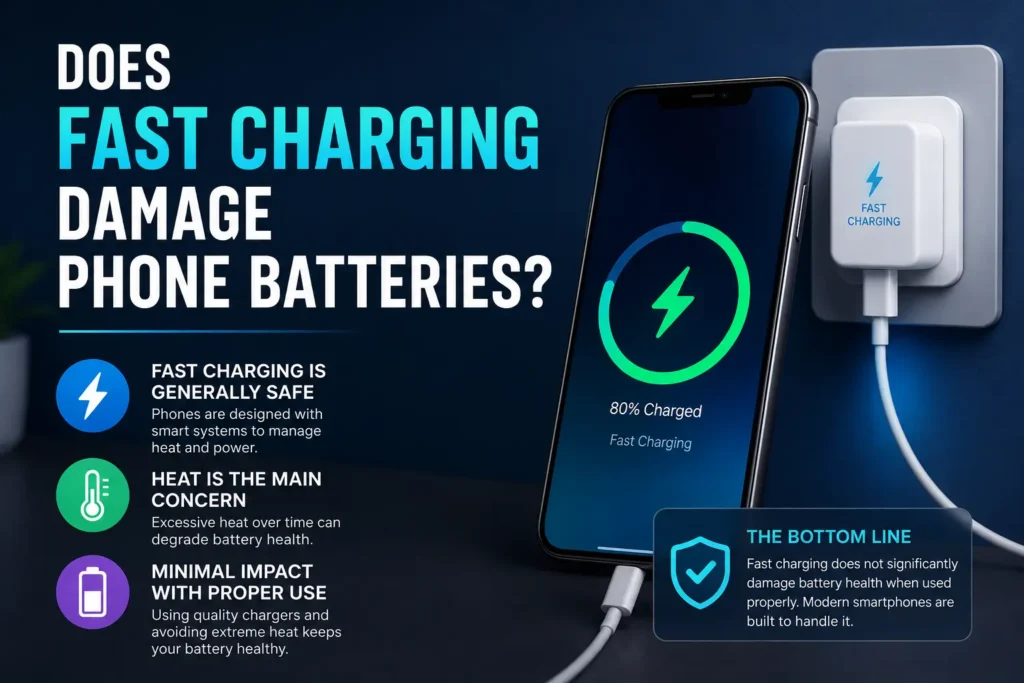
Modern smartphones use advanced charging technologies, intelligent battery management systems, and sophisticated thermal controls to support fast charging safely. Manufacturers design these systems to regulate power flow, monitor battery temperature, and protect long-term battery health. Although fast charging may slightly increase battery aging under specific conditions, it rarely causes significant battery damage on its own. In most cases, excessive heat poses a much greater threat to a lithium-ion battery than charging speed. By understanding how fast charging technology works, users can make smarter charging decisions and extend their battery lifespan. Rather than worrying about charging speed, focus on the factors that truly affect battery performance, such as heat exposure, charging habits, and overall battery care. Taking a few simple precautions can reduce battery degradation and help your phone maintain reliable performance for years.
How Fast Charging Works and Why Modern Phones Can Handle It
To understand whether fast charging damages batteries, it is important to know what happens during the charging process. Most modern smartphones use lithium-ion or lithium-polymer batteries. These batteries store energy through chemical reactions that occur when electricity flows into the battery cells. Traditional chargers typically deliver lower power levels, while fast chargers increase power delivery by supplying higher wattage through carefully controlled voltage and current levels. Technologies such as USB Power Delivery, Qualcomm Quick Charge, SuperVOOC, Warp Charge, and Adaptive Fast Charging allow smartphones to charge much faster than older charging standards. However, modern phones do not simply accept unlimited power from a charger. Instead, a sophisticated battery management system continuously monitors battery temperature, charge level, voltage, and current flow.
When the battery is low, the phone can safely accept higher charging speeds. As the battery approaches full capacity, charging automatically slows down to protect battery health. This process is often referred to as charging tapering. Manufacturers invest heavily in thermal management systems that regulate heat and prevent excessive stress on battery cells. As a result, modern fast charging systems are significantly safer and more efficient than many consumers realize. The charger, cable, phone hardware, and software all work together to ensure that the battery receives only the amount of power it can safely handle. Therefore, fast charging itself is not a reckless process but rather a carefully controlled technology designed to balance convenience and long-term battery performance.
Does Fast Charging Actually Damage Batteries? The Scientific Reality
The short answer is that fast charging can contribute to battery aging over time, but it is unlikely to cause serious damage when used as intended. Every rechargeable battery experiences gradual degradation regardless of how it is charged. Lithium-ion batteries have a limited number of charge cycles, and their capacity naturally decreases as they age. Whether you use a fast charger or a standard charger, the battery will eventually lose some of its original capacity. The key question is whether fast charging significantly accelerates this process. Research and real-world testing show that modern battery management systems have greatly reduced the negative effects once associated with high-speed charging. In most cases, the difference between normal charging and fast charging is relatively small when proper thermal controls are in place.
What truly affects battery longevity is the combination of heat, high voltage stress, and repeated charging habits over long periods. For example, charging a phone in a hot environment, leaving it under a pillow while charging, or exposing it to direct sunlight during charging can cause more battery degradation than the fast charging technology itself. Furthermore, smartphone manufacturers extensively test their devices to ensure that fast charging remains within safe operating limits. As a result, using an official fast charger on a compatible device is generally considered safe for everyday use. While battery capacity may decline slightly faster over several years compared to exclusively slow charging, the difference is often too small for most users to notice during the normal lifespan of a smartphone.
The Real Enemy of Battery Health: Excessive Heat
When discussing battery degradation, heat deserves far more attention than charging speed alone. Heat is one of the primary factors that accelerate chemical aging inside lithium-ion batteries. During charging, some energy is naturally converted into heat. Faster charging can generate more heat, which is why manufacturers focus heavily on thermal management technologies. Excessive temperatures can increase internal resistance, accelerate chemical breakdown, and permanently reduce battery capacity over time. This is why users often notice battery health declining more quickly in devices that frequently operate in hot conditions. Fortunately, modern smartphones include multiple safety mechanisms that help regulate temperature during charging.
The phone may automatically reduce charging speed if the battery becomes too warm, protecting internal components from damage. Nevertheless, user behavior still plays an important role. Charging a phone while playing graphics-intensive games, streaming high-resolution video, or running demanding applications can generate additional heat and place unnecessary stress on the battery. Similarly, leaving a phone inside a parked vehicle on a hot day while charging can significantly impact long-term battery health. If you want to preserve battery capacity, managing heat exposure should be a higher priority than avoiding fast charging altogether. Keeping the phone in a cool, well-ventilated environment during charging can have a greater positive effect on battery lifespan than switching from fast charging to a slower charging method.
Best Practices to Extend Battery Lifespan While Using Fast Charging
The good news is that you can enjoy the convenience of fast charging while still protecting your battery. One of the most effective strategies is avoiding extreme battery levels whenever possible. Many experts recommend keeping the battery between 20% and 80% during regular use because this range reduces chemical stress on lithium-ion cells. Although charging to 100% occasionally is perfectly fine, repeatedly keeping the battery at full charge for extended periods may contribute to faster aging. Another useful practice is using high-quality chargers and cables that meet manufacturer specifications. Cheap or uncertified accessories may not provide stable power delivery and can increase the risk of overheating. It is also wise to remove thick protective cases if you notice excessive heat during charging, as trapped heat can negatively affect battery health.
Many modern smartphones now include adaptive charging features that learn user habits and slow down charging overnight to reduce battery wear. Taking advantage of these features can help extend battery longevity without sacrificing convenience. Additionally, avoiding heavy phone usage during charging can minimize temperature increases and improve charging efficiency. Regular software updates are equally important because manufacturers often optimize battery management algorithms through firmware improvements. By combining these simple habits with responsible fast charging practices, users can maintain excellent battery performance for several years while still benefiting from rapid charging technology.
Final Verdict: Should You Worry About Fast Charging?
For most smartphone users, the answer is no. Fast charging does not significantly damage phone batteries when used properly with compatible devices and certified chargers. Modern smartphones are engineered with sophisticated battery protection systems that carefully manage voltage, current, and temperature throughout the charging process. While all batteries experience gradual degradation over time, the impact of fast charging alone is relatively minor compared to factors such as excessive heat, poor charging habits, and natural battery aging. Rather than avoiding fast charging altogether, users should focus on maintaining healthy charging practices, minimizing heat exposure, and using reliable charging accessories.
The convenience of fast charging often outweighs the small amount of additional battery wear that may occur over several years of use. Ultimately, fast charging is not the battery-destroying technology that many myths suggest. When used responsibly, it is a safe and practical feature that allows modern smartphone users to stay connected without constantly worrying about battery life.
Frequently Asked Questions
Does fast charging reduce battery lifespan?
Fast charging may contribute slightly to long-term battery wear, but modern smartphones are designed to minimize the impact through intelligent battery management systems.
Is it safe to use a fast charger every day?
Yes. Using an official or certified fast charger daily is generally safe for modern smartphones.
What damages phone batteries the most?
Excessive heat, extreme charging habits, poor-quality chargers, and natural battery aging are among the biggest factors affecting battery health.
Should I charge my phone to 100% every day?
Occasional full charging is fine, but keeping the battery between 20% and 80% can help reduce long-term battery stress.
Is overnight charging harmful?
Most modern smartphones automatically manage overnight charging. However, using adaptive charging features can further protect battery health.
hi