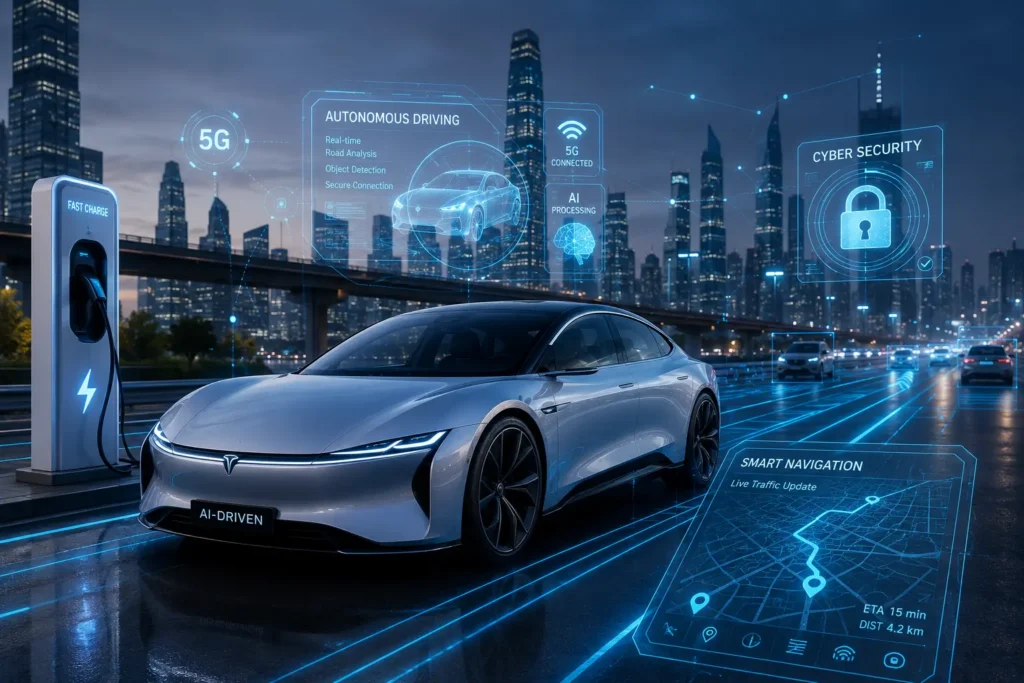
The automotive industry has changed dramatically during the last decade. Today, vehicles are no longer simple transportation machines. Instead, they have evolved into intelligent systems powered by advanced software, artificial intelligence, connectivity, and innovative engineering. This transformation has created a new era of driving where convenience, safety, efficiency, and sustainability are becoming more important than ever before.
Also, Tech On Dicas Car represents the modern relationship between technology and automobiles. Whether you are interested in electric vehicles, smart safety systems, connected car technology, or future transportation solutions, understanding these innovations can help you make informed decisions.
As technology continues to advance, manufacturers are introducing groundbreaking features that were once considered science fiction. From autonomous driving systems to intelligent navigation tools, today’s vehicles are becoming smarter every year.
In this comprehensive guide, we will explore the latest automotive technologies, emerging trends, benefits of smart vehicles, and what the future holds for drivers around the world.
Autonomous Driving Features
These technologies are transforming the automotive landscape and creating safer, more efficient transportation options for consumers.
The Evolution of Automotive Technology
The automotive sector has experienced several technological revolutions over the years.
Early Mechanical Era
Initially, vehicles relied entirely on mechanical systems. Drivers had complete control over every aspect of operation, and very few safety features existed.
Electronic Revolution
Later, electronic control units were introduced. Features such as anti-lock braking systems, electronic fuel injection, and automatic transmissions became common.
Digital Transformation
Today, digital technology dominates vehicle development. Software now controls many vehicle functions, creating opportunities for innovation and enhanced performance.
Because of this transformation, automobiles are becoming more intelligent and connected than ever before.
Smart Cars: The Future of Driving
Smart cars have become one of the most significant innovations in the automotive industry.
A smart car uses sensors, cameras, software, and internet connectivity to improve driving experiences. These vehicles collect and analyze data continuously, allowing them to make intelligent decisions.
Key Features of Smart Cars Tech On Dicas Car
Real-Time Navigation
Modern navigation systems provide live traffic updates, route optimization, and alternative travel suggestions.
Voice Assistants
Drivers can control vehicle functions using voice commands. This feature improves convenience and reduces distractions.
Remote Monitoring
Vehicle owners can monitor fuel levels, battery status, and maintenance schedules through smartphone applications.
Predictive Maintenance
Smart systems can identify potential issues before major problems occur.
As a result, vehicle reliability and user satisfaction are significantly improved.
Artificial Intelligence in Modern Cars
Artificial intelligence is revolutionizing the automotive industry.
AI enables vehicles to process large amounts of information instantly. Consequently, cars can react to changing road conditions faster and more accurately than humans in certain situations.
Applications of AI in Vehicles
Driver Behavior Analysis
AI systems evaluate driving patterns and provide recommendations for safer driving.
Collision Prevention
Advanced sensors and machine learning algorithms detect hazards and help prevent accidents.
Traffic Prediction
AI-powered navigation systems analyze traffic conditions and recommend efficient routes.
Autonomous Driving
Self-driving technologies rely heavily on artificial intelligence to understand surroundings and make driving decisions.
Because AI continues to improve, future vehicles are expected to become even safer and more efficient.
Electric Vehicles and Sustainable Transportation
Electric vehicles have become one of the most important developments in automotive technology.
Manufacturers such as Tesla, BMW, Mercedes-Benz, Hyundai, Nissan, Ford, and Toyota are investing heavily in EV production.
Levels of Autonomous Driving
The automotive industry classifies autonomous driving into six levels:
Level 0 – No Automation
The driver performs all driving tasks.
Level 1 – Driver Assistance
Basic assistance features such as adaptive cruise control are provided.
Level 2 – Partial Automation
The vehicle can assist with steering and acceleration while the driver remains responsible.
Level 3 – Conditional Automation
The vehicle handles many driving tasks but may require driver intervention.
Level 4 – High Automation
The vehicle can operate independently in certain environments.
Level 5 – Full Automation
No human driver is required under any conditions.
Benefits of Self-Driving Vehicles
Autonomous technology offers several potential benefits:
- Reduced Traffic Accidents
- Improved Road Safety
- Greater Mobility for Elderly Individuals
- Reduced Traffic Congestion
- Enhanced Fuel Efficiency
- Better Time Utilization During Travel
Although widespread adoption may still take years, self-driving technology continues to advance rapidly.
Automotive Cybersecurity: Protecting Connected Vehicles
As vehicles become increasingly connected, cybersecurity has become a major concern.
Modern cars contain dozens of electronic control units connected through complex networks. While connectivity provides numerous benefits, it also creates potential security risks.
Cybersecurity systems are being developed to protect vehicles from:
- Unauthorized Access
- Data Theft
- Vehicle Hacking
- Malware Attacks
- GPS Manipulation
- Remote Control Exploitation
Why Automotive Cybersecurity Matters
Connected vehicles generate significant amounts of data. This data includes:
- Driving Behavior
- Navigation History
- Vehicle Performance
- Personal Information
- Connected Device Data
Manufacturers are implementing advanced security measures such as:
- End-to-End Encryption
- Secure Software Updates
- Multi-Layer Authentication
- Intrusion Detection Systems
- Secure Cloud Storage
Therefore, cybersecurity remains a critical component of future automotive technology.
Vehicle Safety Innovations Transforming the Industry
Safety remains one of the most important priorities for automotive manufacturers.
Modern vehicles are equipped with intelligent safety technologies designed to prevent accidents and protect passengers.
Collision Avoidance Systems
Collision avoidance systems use sensors and cameras to detect potential hazards.
When danger is identified:
- Drivers receive warnings.
- Automatic braking may be activated.
- Steering assistance may be provided.
Emergency Braking Technology
Automatic emergency braking systems can reduce accident severity by applying brakes when a collision appears imminent.
Driver Monitoring Systems
Advanced cameras monitor driver attention levels.
These systems can detect:
- Fatigue
- Drowsiness
- Distraction
- Unsafe Driving Behavior
Smart Airbag Technology
Modern airbags deploy based on:
- Impact Severity
- Passenger Position
- Vehicle Speed
- Collision Direction
As a result, passenger protection has improved significantly.
Smart Infotainment Systems
Today’s drivers expect more than transportation. They expect entertainment, convenience, and connectivity.
Modern infotainment systems provide access to:
- Music Streaming
- Navigation Services
- Voice Commands
- Smartphone Integration
- Hands-Free Calling
- Vehicle Information
Features of Advanced Infotainment Systems
Touchscreen Displays
Large high-definition displays improve usability and user experience.
Voice Recognition
Drivers can control many vehicle functions using simple voice commands.
Smartphone Integration
Technologies such as:
- Apple CarPlay
- Android Auto
allow seamless smartphone connectivity.
Over-the-Air Updates
Software improvements can be installed remotely without visiting a service center.
Consequently, vehicles continue improving long after purchase.
Green Transportation and Environmental Sustainability
Environmental sustainability is shaping the future of transportation.
Consumers are increasingly seeking eco-friendly vehicles that reduce emissions and environmental impact.
Hybrid Vehicles
Hybrid cars combine:
- Internal Combustion Engines
- Electric Motors
This combination improves fuel efficiency while reducing emissions.
Electric Vehicles
Electric vehicles eliminate tailpipe emissions entirely.
Benefits include:
- Cleaner Air
- Lower Operating Costs
- Reduced Noise Pollution
- Lower Carbon Footprint
Hydrogen Fuel Cell Vehicles
Hydrogen fuel cells generate electricity while producing only water vapor as a byproduct.
This technology offers:
- Fast Refueling
- Long Driving Range
- Minimal Environmental Impact
Although adoption remains limited, hydrogen technology continues to evolve.
Internet of Things (IoT) in Modern Vehicles
The Internet of Things has expanded into the automotive industry.
IoT allows vehicles to communicate with devices, systems, and infrastructure.
Examples include:
- Smart Parking Systems
- Vehicle Diagnostics
- Connected Traffic Lights
- Fleet Management Solutions
- Remote Vehicle Monitoring
Benefits of Automotive IoT
Improved Efficiency
Real-time monitoring helps optimize vehicle performance.
Predictive Maintenance
Potential issues can be identified before major failures occur.
Enhanced Safety
Connected systems provide valuable information to drivers.
Therefore, IoT technology is becoming increasingly important in modern transportation.
Cloud Computing and Automotive Innovation
Cloud computing plays a vital role in connected vehicles.
Modern cars generate massive amounts of data daily. Cloud platforms help process, store, and analyze this information efficiently.
Applications of Cloud Technology
Navigation Optimization
Cloud systems analyze traffic conditions and suggest efficient routes.
Remote Diagnostics
Vehicle issues can be identified remotely.
Software Updates
Manufacturers can distribute updates instantly.
Data Analytics
Driving behavior and vehicle performance data can be analyzed to improve future vehicle designs.
Consequently, cloud technology enhances both vehicle functionality and user experience.
Advanced Materials in Automotive Manufacturing
Automotive manufacturers are constantly seeking ways to improve efficiency.
One effective strategy involves using advanced lightweight materials.
Common Advanced Materials
- Carbon Fiber
- Aluminum Alloys
- High-Strength Steel
- Composite Materials
Benefits
Improved Fuel Efficiency
Lighter vehicles consume less energy.
Enhanced Performance
Reduced weight improves acceleration and handling.
Increased Durability
Modern materials offer excellent strength and longevity.
Therefore, advanced materials contribute significantly to modern vehicle design.
Future Automotive Trends to Watch
The automotive industry continues evolving rapidly.
Several emerging trends are expected to shape the future of transportation.
Fully Autonomous Vehicles
Self-driving technology will continue improving and becoming more accessible.
Smart Cities Integration
Vehicles will communicate directly with city infrastructure.
AI-Powered Transportation
Artificial intelligence will optimize traffic management and improve driving safety.
Expanded Electric Vehicle Adoption
Battery technology improvements will accelerate EV adoption globally.
Vehicle Subscription Services
Consumers may increasingly choose subscription-based vehicle ownership models.
Sustainable Manufacturing
Automakers will focus on reducing environmental impact during production.
As these trends continue developing, transportation will become safer, cleaner, and more efficient.
Benefits of Embracing Automotive Technology
Modern automotive technology offers numerous advantages.
Enhanced Safety
Advanced systems help prevent accidents and protect occupants.
Improved Efficiency
Smart technologies optimize energy consumption and performance.
Greater Convenience
Connected features simplify daily driving.
Environmental Sustainability
Electric and hybrid vehicles reduce emissions.
Better Driving Experience
Technology improves comfort, connectivity, and entertainment.
Consequently, consumers benefit from a more enjoyable and efficient transportation experience.
Frequently Asked Questions (FAQ)
What does Tech On Dicas Car mean?
Tech On Dicas Car refers to the integration of advanced technology, innovation, artificial intelligence, connectivity, and smart systems within modern automobiles.
What are smart cars?
Smart cars are vehicles equipped with sensors, internet connectivity, artificial intelligence, and automation technologies that enhance safety, convenience, and efficiency.
Are electric vehicles better than gasoline vehicles?
Electric vehicles offer lower operating costs, reduced emissions, quieter operation, and improved efficiency compared to traditional gasoline-powered vehicles.
How safe are self-driving cars?
Self-driving technology is designed to improve safety by reducing human errors. However, autonomous systems continue to be tested and refined before full deployment.
What is ADAS technology?
ADAS stands for Advanced Driver Assistance Systems. These technologies help drivers through features such as lane keeping assistance, adaptive cruise control, and automatic emergency braking.
Why is cybersecurity important in connected vehicles?
Connected vehicles exchange large amounts of data. Cybersecurity protects vehicle systems, personal information, and communication networks from unauthorized access.
How does AI improve modern vehicles?
Artificial intelligence enables predictive maintenance, collision avoidance, navigation optimization, driver monitoring, and autonomous driving capabilities.
What role does 5G play in automotive technology?
5G enables faster communication between vehicles, infrastructure, and cloud systems, supporting advanced connected and autonomous driving features.
Will autonomous vehicles replace traditional driving?
While autonomous technology continues advancing, fully replacing human drivers may take many years due to regulatory, technological, and infrastructure challenges.
What is the future of automotive technology?
The future includes electric vehicles, self-driving cars, AI-powered transportation, smart city integration, advanced safety systems, and sustainable manufacturing processes.
Conclusion
Tech On Dicas Car represents the exciting intersection of technology and transportation. Modern vehicles are becoming smarter, safer, more connected, and environmentally friendly. Innovations such as artificial intelligence, electric vehicles, autonomous driving systems, advanced safety technologies, and connected infrastructure are reshaping the automotive landscape.
As technology continues evolving, consumers can expect even greater advancements in vehicle intelligence, sustainability, and convenience. Whether you are interested in smart cars, electric vehicles, autonomous driving, or future transportation trends, understanding these innovations will help you stay ahead in an increasingly connected world.
The future of driving is no longer a distant vision. It is already unfolding today, and Tech On Dicas Car serves as a gateway to understanding the remarkable transformation taking place across the global automotive industry.